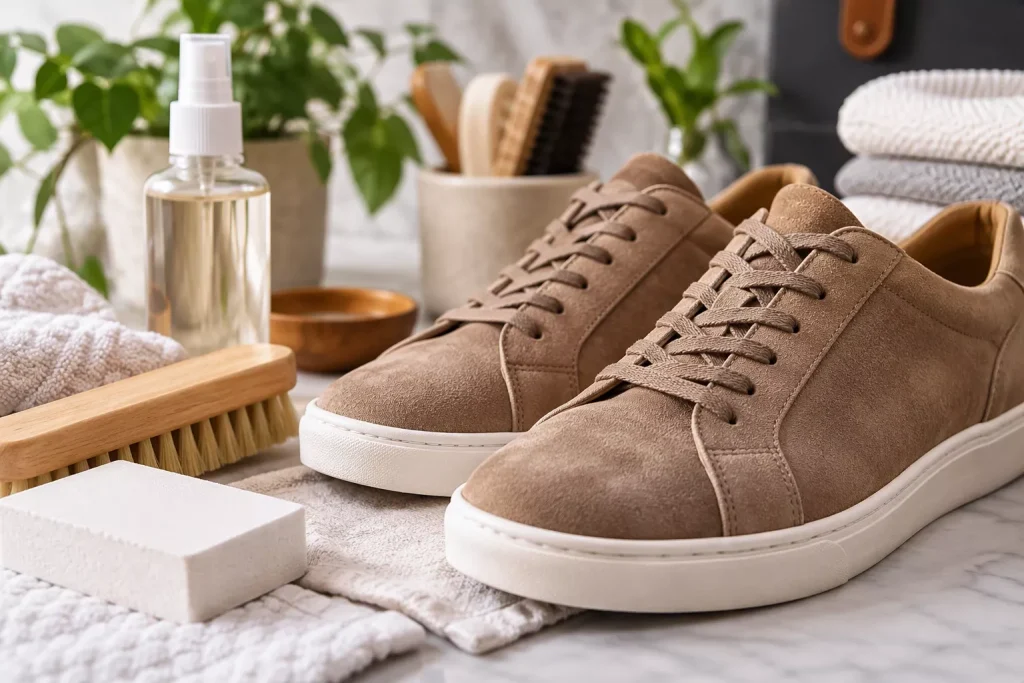
To clean suede shoes without ruining the nap, use a dry suede brush and eraser to gently lift surface dirt and scuffs. For liquid or salt stains, lightly blot the area and use specialized suede cleaners, avoiding heavy water saturation, which strips natural oils and flattens the delicate texture.
Suede shoes are a timeless addition to any wardrobe, offering a rich, textured depth of color and a soft, luxurious feel that smooth leather simply cannot replicate. However, that very same texture—known as the nap—makes suede exceptionally vulnerable to the elements. Unlike finished leather, which has a sealed, water-resistant outer grain, suede is crafted from the split underside of animal hide. Its open, porous protein fibers act like a microscopic forest, trapping dust, absorbing liquids, and flattening under friction.
For residents in Eastchester and the surrounding Westchester area, keeping suede pristine is a constant battle against seasonal mud, summer dust, and harsh winter road salt. Understanding the science of suede care is the first step in protecting your investment. While routine maintenance can be performed at home with the right tools, deep stains and delicate restorations require the touch of a professional specialist, which is exactly what our leather and suede cleaning services in Eastchester are for.
Why Does Water Ruin Suede Shoes?
Water alters the natural oils within suede leather, causing the fibers to shrink, stiffen, and lose their soft, velvety texture as they dry.
To understand why water damages suede, you have to look at the material at a structural level. Suede is made by buffing the inner split of a hide to create a raised, fuzzy surface. During tanning, the leather is treated with specialized oils and fats to keep these delicate collagen fibers flexible, soft, and separated.
When water saturates suede, it does not directly destroy the protein fibers, but it acts as a highly effective solvent for those internal tanning oils. The water molecules bind with the oils deep within the leather. As the water evaporates into the air, it migrates to the surface, drawing the essential oils out of the suede with it. Once dry, the fibers are left completely depleted of their natural lubricants. They shrink, become brittle, and bind together, resulting in a stiff, board-like texture.
Furthermore, rubbing or scrubbing suede while it is wet physically crushes the weakened fibers. This friction distorts their natural alignment and creates permanent bald, shiny patches that can never be restored. This is why proper garment and footwear preparation is so critical; attempting to clean a delicate material without understanding its chemistry often causes more harm than good. For more on how proper preparation saves your wardrobe, read our guide on how to prepare your wash.
How Do You Clean Dry Scuffs and Light Dirt From Suede?
You can safely remove dry scuffs and light surface dirt at home with a soft-bristled suede brush and a specialized crepe eraser to gently lift flattened fibers.
Routine maintenance is the key to extending the lifespan of your suede shoes. As soon as you notice dry dust, dried mud, or light scuff marks, address them with dry-cleaning methods. Never apply water or liquid cleaners to general surface dust, as this will only turn the dust into mud and push it deeper into the porous leather.
To clean dry scuffs and light dirt at home, follow this professional step-by-step process:
- Ensure the Shoes are Completely Dry: Never attempt to brush damp or wet suede. If your shoes are wet from rain, insert cedar shoe trees or stuff them with plain white tissue paper (avoid newspaper, as the ink can transfer) and let them air-dry naturally away from direct heat sources.
- Perform an Initial Brush: Using a soft suede brush (nylon or soft brass bristles), brush gently in a single, uniform direction. This removes loose dust and lifts the nap so you can see the actual scuffs underneath.
- Use a Suede Eraser: For stubborn scuffs, shiny spots, or dried-on dirt, use a specialized suede eraser. Apply light, targeted pressure and rub the eraser back and forth over the mark. The eraser will crumble, lifting the dirt and friction-flattened fibers out of the nap.
- Brush to Restore the Nap: Once the scuffs are gone, use your suede brush in a gentle back-and-forth motion. This coaxes the flattened fibers back into their upright, velvety state.
Regularly brushing your shoes after each wear prevents dust from settling deep into the fibers, keeping the nap looking fresh and uniform.
How Do You Remove Salt and Road-Brine Stains From Suede?
Winter salt and road-brine rings require careful neutralization with a highly diluted white vinegar solution to dissolve the mineral deposits without saturating the leather.
Westchester winters bring a major hazard for suede footwear: road salt and liquid brine. These de-icing agents are highly alkaline and hygroscopic, meaning they draw moisture out of the leather while leaving behind white, crusty mineral rings. If left untreated, road salt will permanently dehydrate the leather, causing it to crack, warp, and rot.
To safely neutralize and remove salt stains at home, you must use a mild acid to counteract the alkaline salt deposits:
- Mix a Neutralizing Solution: Combine equal parts white distilled vinegar and cool water. The acetic acid in the vinegar is gentle enough for leather but highly effective at breaking down mineral salts.
- Dampen a Microfiber Cloth: Dip a clean microfiber cloth into the solution and wring it out thoroughly. The cloth should be slightly damp, never dripping wet.
- Blot the Salt Line: Gently blot the white salt rings with the damp cloth. Do not scrub or press hard. Work from the outside of the stain toward the center to avoid spreading the salt.
- Wipe the Entire Shoe: To prevent water spotting, lightly wipe down the rest of the shoe with a clean, barely damp cloth so the leather dries uniformly.
- Dry and Brush: Allow the shoes to dry completely in a cool, well-ventilated room. Once dry, use a suede brush to lift the nap and restore the texture.
If the salt has deeply penetrated the leather, or if the shoes dried stiff before you could treat them, home remedies may cause further water spotting. In these cases, professional restoration is required to save the footwear.
How Do You Get Oil and Grease Stains Out of Suede Shoes?
Treat oil and grease stains immediately with an absorbent powder like cornstarch or talcum powder to draw lipids out of the porous fibers before they set.
Oil is the single most destructive substance that can contact suede. Because suede is highly porous and lacks a protective grain barrier, it absorbs lipids—whether from food, automotive fluids, or cosmetics—almost instantly. Once oil coats the delicate collagen fibers, it darkens them, bonds with the leather, and attracts dirt, creating a dark, unsightly smudge.
If you catch an oil or grease stain immediately, you can attempt to draw it out using capillary action:
- Apply an Absorbent Powder: Generously dust the oil spot with cornstarch, talcum powder, or baking soda. Do not rub the powder into the leather; simply pile it on top of the stain.
- Let It Sit: Leave the powder on the stain for at least 12 to 24 hours. The powder will slowly draw the liquid oil out of the porous suede fibers.
- Brush Away the Powder: Gently brush the powder away using a soft suede brush.
- Repeat if Necessary: If the stain is lighter but still visible, repeat the process with a fresh layer of powder.
If the oil stain has already dried, set, or been exposed to heat, home remedies will fail. Scrubbing oil out with household dish soap or water will only spread the grease, strip surrounding natural oils, and ruin the nap. Dried oil requires specialized, non-aqueous dry-cleaning solvents that dissolve lipids without using water. To learn more about how professional stain removal works across different fabrics, explore our comprehensive guide on removing stains from different fabrics.
How Do You Clean Shearling and Sheepskin Boots?
Cleaning shearling and sheepskin boots requires a specialized, low-moisture approach to protect the delicate suede exterior while keeping the inner wool lining soft and odor-free.
Shearling and sheepskin boots (such as classic UGG-style boots) are winter staples in Eastchester, but they present a unique cleaning challenge. Shearling is a double-faced material: it features a soft suede exterior and a thick, insulating wool fleece interior. Because these boots are worn in cold, wet conditions, they frequently suffer from a combination of exterior salt stains and interior moisture, which can lead to odor-causing bacteria.
To care for shearling boots at home, you must treat the two sides differently:
- The Suede Exterior: Treat the outer shell like suede shoes. Use a suede brush and eraser for dry scuffs. For salt stains, use the highly diluted vinegar method described above, taking extreme care not to saturate the sheepskin, which can shrink and warp the boot’s shape.
- The Wool Interior: To refresh the fleece lining, sprinkle a small amount of baking soda or cornstarch inside the boots. Let it sit overnight to absorb moisture and odors, then thoroughly vacuum the interior using a hose attachment.
Never submerge shearling boots in water, and never place them in a washing machine or a clothes dryer. The intense heat and agitation will shrink the hide, melt the adhesives, and permanently felt the wool lining. Because shearling boots are a significant investment, many owners choose to avoid the risks of home cleaning entirely and trust a professional leather specialist.
When Should You Take Your Suede Shoes to a Professional Specialist?
Take suede shoes to a professional specialist when they have deep oil stains, extensive water damage, or are high-value designer items that require advanced solvent-based restoration.
While routine brushing and light spot-cleaning are excellent for daily maintenance, home care has strict limitations. Suede is unforgiving; a single mistake with water, vinegar, or an eraser can cause permanent discoloration, bald spots, or warped leather.
Professional cleaners utilize specialized, non-aqueous solvents and advanced mechanical equipment to lift deep-set stains, neutralize road salts, and replenish lost oils without altering the leather’s delicate structure.
At Village Launderette, we provide expert care for specialty fabrics, including suede, shearling, sheepskin, leather, and premium sneakers. Our leather specialists understand the precise chemistry required to clean delicate hides safely, restoring the nap and removing stubborn stains without risking the integrity of your footwear.
Because specialty items require custom assessments based on their material, construction, and condition, these services are call-for-pricing. For everyday laundry and dry-cleaning needs, view our transparent rates in our wash-and-fold pricing guide or visit our main laundry services page to see how we care for your entire wardrobe.
Suede Stain Types and Home vs. Professional Treatment
| Stain Type | Home Remedy | Professional Treatment | Risk Level |
|---|---|---|---|
| Dry Mud & Dust | Suede brush and gentle dry brushing | Mechanical vacuuming and nap restoration | Low |
| Scuffs & Friction Marks | Suede eraser or crepe brush | Steam lifting and fiber re-alignment | Low |
| Road Salt & Brine | Diluted white vinegar blot (1:1 ratio) | Chemical neutralization and conditioning | Medium |
| Water Spots | Light overall dampening and uniform drying | Controlled moisture extraction and oil replenishment | Medium |
| Oil & Grease | Immediate cornstarch application (absorbent) | Specialized non-aqueous solvent extraction | High |
Frequently Asked Questions
Can you wash suede shoes in a washing machine?
No, you should never put suede shoes in a washing machine. Excess water will strip the natural tanning oils, detergent will damage the delicate collagen fibers, and mechanical agitation will permanently flatten and ruin the nap.
How do you fix suede that got wet and dried stiff?
If your suede has dried stiff after getting wet, try gently massaging the leather with your hands to break up the hardened fibers. Then brush the area with a soft suede brush in multiple directions to lift and restore the nap.
Can you use a regular pencil eraser on suede shoes?
In an emergency, you can use a clean, pink pencil eraser to lift light scuffs, but make sure it has no graphite residue. However, a dedicated crepe suede eraser is highly recommended, as it crumbles safely without leaving colored marks or tearing the fibers.
How do you protect suede shoes from future stains?
The best way to protect suede is to apply a high-quality, fluoropolymer-based suede protector spray before wearing them. This creates an invisible, hydrophobic barrier that repels water, oil, and dirt, giving you time to blot away spills before they sink into the fibers.
Does vinegar ruin suede?
Highly diluted white vinegar does not ruin suede when used sparingly to neutralize alkaline salt stains. However, never saturate the leather with vinegar, and always wipe down the entire shoe evenly to prevent uneven drying and water spots.
What is the difference between cleaning suede and cleaning leather?
Smooth leather has a sealed outer grain that can tolerate gentle moisture, leather soaps, and cream polishes. Suede is split leather with an open, porous nap that absorbs liquids instantly, meaning it must be cleaned primarily through dry methods and specialized non-aqueous solvents.
 Reclaim Your Weekend