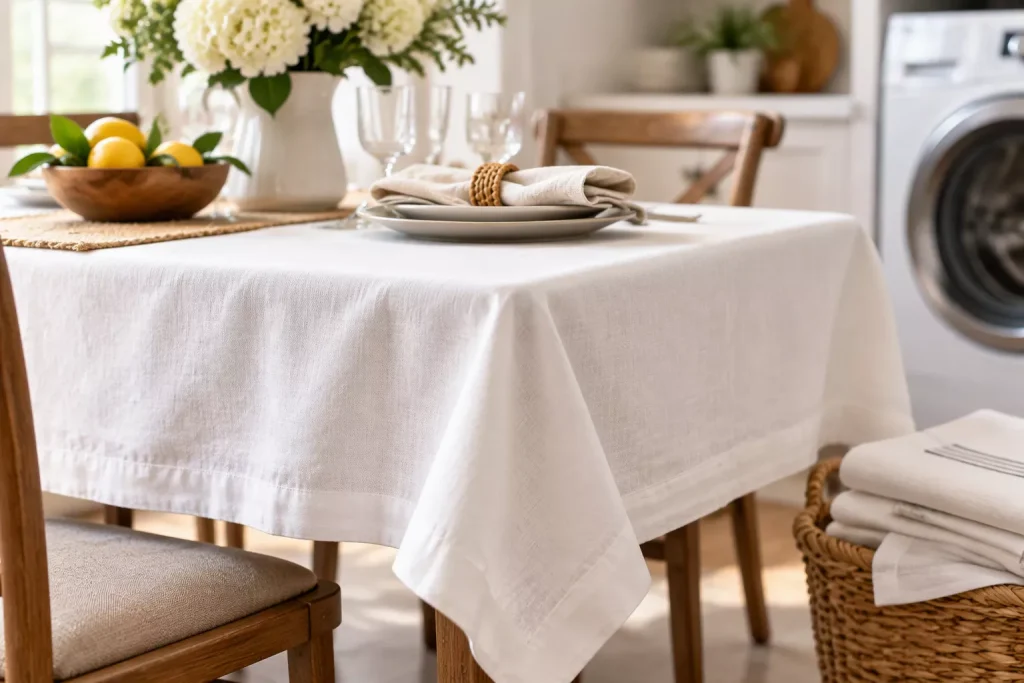
To wash a tablecloth effectively, identify the fabric type, pre-treat visible stains, and choose water temperatures that protect against shrinkage and fiber distortion. Cotton and polyester tablecloths can generally be machine-washed on a gentle cycle, while delicate linen or heirloom pieces require professional dry Cleaning or careful hand washing.
Preparing holiday table linens requires a clear understanding of fabric properties, stain chemistry, and proper storage habits. Whether you’re pulling vintage lace from long-term storage or managing cranberry, gravy, and candle wax spills after Thanksgiving dinner, treating textiles correctly preserves color, structure, and finish.
Why Do Stored Tablecloths Develop Yellow Stains Before the Holidays?
Yellow stains on stored tablecloths usually come from oxidation of residual food oils, sugars, and natural fiber fats left behind after previous uses.
When table linens sit in a closet or drawer for months between holiday gatherings, minute traces of butter, turkey fat, wine, or cooking oils that seemed invisible when clean begin to oxidize when exposed to light and atmospheric oxygen. This chemical breakdown turns clear residues into noticeable yellow or brownish spots, particularly along fold lines where pressure concentrates the residues. Additionally, storing linens in non-breathable plastic bags traps lingering moisture, while cardboard boxes and wooden drawers off-gas acidic compounds that discolor natural fibers like cotton and flax linen.
Before placing a long-stored tablecloth on your holiday dining table, inspect the entire fabric under clear lighting. Spotting these oxidized marks early lets you treat them before ironing, since direct heat on an oxidized oil spot permanently sets the stain into the textile matrix.
How Should You Wash Cotton, Polyester, and Synthetic Tablecloths?
Wash cotton and synthetic tablecloths in warm or cool water on a gentle cycle with mild liquid detergent, after pre-treating any grease or food spots.
Cotton, polyester, and poly-cotton blends make up most modern dining linens because they offer durability and soil resistance. However, each material requires slight adjustments during the wash cycle to avoid setting creases or dulling rich holiday colors:
- 100% Cotton Tablecloths: Cotton fibers absorb liquids quickly, making food stains common. Wash cotton linens in warm water for light colors or cool water for dark holiday dyes (such as deep burgundy or forest green). Use a gentle wash cycle to minimize fiber stress and shrinkage.
- Polyester and Synthetic Blends: Synthetics release oil-based stains less readily than natural fibers, so pre-treat spots with an enzyme-based liquid detergent. Wash polyester linens in cool or warm water. Avoid high heat during both the wash and dry cycles, as synthetic fibers can melt or develop permanent heat creases.
- Washing Cloth Napkins and Placemats: Wash matching cotton or poly cloth napkins alongside the main tablecloth to ensure uniform color aging. Pre-soak heavily soiled napkins in cool water with oxygen bleach prior to running the regular cycle.
When managing bulky household dining textiles, overloading home washing machines can cause severe twisting, uneven Cleaning, and deep wrinkling. For large family gatherings or commercial dining setups, utilizing professional laundry services ensures heavy cotton and blended table linens are thoroughly cleaned in commercial-capacity equipment.
Village Launderette processes cotton and synthetic tablecloths through our Household Items service at $2.00/lb for drop-off orders (10 lb minimum) or $2.60/lb for wash and fold laundry delivery (15 lb minimum).
How Do You Clean Delicate Linen and Antique Table Linens?
Professionally dry-clean delicate, pure linen and antique tablecloths, or gently hand-wash them in cold water using a pH-neutral textile detergent.
Flax linen is an exceptional natural fiber prized for its luster and drape, but its long cellulosic structure makes it vulnerable to shrinkage, mechanical damage, and fiber distortion under harsh machine agitation. Heirloom linens, damask weaves, lace-trimmed cloths, and hand-embroidered pieces require careful handling:
- Fiber Vulnerability: Pure linen lacks cotton’s elasticity. Rough tumbling in a standard home agitator snaps fine threads, tears delicate lace, and creates crushed wrinkles that are almost impossible to press smooth.
- Temperature Sensitivity: Hot water shrinks pure linen significantly and strips natural flax oils, rendering the fabric stiff and brittle over time.
- Professional Dry Cleaning Care: Dry Cleaning protects pure linen from water-induced shrinkage and fiber distortion while thoroughly dissolving non-water-soluble food grease.
For fine flax linen, silk-blended cloths, or irreplaceable family heirlooms, local dry Cleaning provides the safest outcome. Village Launderette offers specialized care through our Eastchester dry cleaning service at $4.50 per piece, plus the published $1.00 linen surcharge ($5.50 total per piece), or $6.00 per piece for pickup and delivery (5-piece minimum).
How Do You Remove Set-In Holiday Stains From Table Linens?
Treat set-in holiday stains based on their chemical composition, using cold-water pre-soaks and targeted enzyme treatments before washing or applying heat.
Holiday meals present a complex mix of pigments, proteins, and lipids. Treating spills promptly prevents them from becoming permanent fixtures on your table linens:
- Butter, Gravy, and Salad Dressing (Lipids): Apply a small drop of concentrated clear dish soap or an enzyme-rich liquid laundry detergent directly to the dry stain. Gently work the cleaner into the weave with your fingertips, then let it sit for 15 to 20 minutes before laundering in warm water.
- Cranberry Sauce and Berry Pies (Tannins and Natural Dyes): Flush the back of the fabric with cold running water to push the pigment out rather than driving it deeper into the weave. Apply an oxygen-based stain remover and pre-soak the cloth in cold water.
- Red Wine Spills: Blot liquid immediately with a clean towel without rubbing. For detailed step-by-step restoration techniques, consult our comprehensive expert stain removal guide.
- Candle Wax Drops: Allow the wax to harden completely (or accelerate hardening with an ice cube). Gently scrape off the surface crust using the dull edge of a butter knife. Avoid ironing directly over colored wax residue, as heat melts the paraffin into the fibers and sets the dye permanently.
Critical Care Rule: Never iron or machine-dry a tablecloth that still exhibits visible food or beverage stains. Direct heat oxidizes residual sugars and bakes animal fats directly into the textile fibers, permanently discoloring the fabric.
How Do You Iron and Press a Tablecloth Without Leaving Scorch Marks or Creases?
Iron a tablecloth while it is still slightly damp, using the correct fabric heat setting, and press from the center outward to preserve symmetry and prevent double-creasing.
Pressing a large tablecloth on a standard home ironing board often introduces unwanted secondary wrinkles along the edges. Follow these steps for smooth results:
- Damp Ironing Method: Remove the tablecloth from the dryer while it retains approximately 10% to 15% moisture, or spray it evenly with clean water. Moisture allows the iron to relax fiber bonds quickly without requiring extreme temperatures.
- Temperature Selection: Set your iron according to fabric composition—high heat with steam for 100% cotton, medium heat for polyester blends, and medium-high heat with generous steam for pure linen.
- Pressing Direction: Work from the center of the cloth outward toward the hem lines. Pressing in straight passes along the grain of the fabric prevents the edges from stretching into wavy, uneven shapes.
- Preventing Scorch Marks: Avoid holding the iron in one spot. For dark-colored linens or delicate embroidery, place a thin cotton press cloth between the iron and the tablecloth to prevent fabric shine or scorch marks.
If pressing large linens at home feels overwhelming, reviewing our wash and fold pricing guide can help you evaluate options for professional textile care and commercial press preparation.
How Should You Store Table Linens to Prevent Wrinkles and Yellowing After the Holidays?
Store clean, completely dry table linens by rolling them around acid-free cardboard tubes or placing them inside breathable cotton storage bags kept in a cool, dark environment.
Improper storage destroys months of careful laundering. To keep your table linens in pristine condition until the next holiday season, implement these protective steps:
- Ensure 100% Dryness: Never store a tablecloth that retains dampness from washing or steam ironing. Trapped moisture breeds mildew spores and causes irreversible yellow foxing spots.
- Avoid Plastic Containers: Sealed plastic bins and vinyl bags trap humidity and off-gas chemicals that turn white cotton and yellow linen dark over time. Use 100% breathable cotton garment bags or clean pillowcases instead.
- Roll Instead of Folding: Folding tablecloths creates hard creases that weaken fabric threads along the fold lines over time. Rolling the clean cloth loosely around an acid-free cardboard tube eliminates creasing entirely and keeps the linen table-ready.
- Keep Out of Direct Sunlight: Store packed linens inside a dark closet away from exterior wall temperature fluctuations and UV light, which bleaches dyed fabrics unevenly.
When managing busy post-holiday cleanups, scheduling our laundry pickup and delivery service lets you offload heavy household laundry and table linens without leaving home.
Tablecloth Care and Cleaning Reference Guide
The following table summarizes recommended cleaning procedures, temperature selections, and service options based on tablecloth fabric type:
| Fabric Type | Recommended Wash Method | Water Temperature | Professional Service Option |
|---|---|---|---|
| 100% Cotton | Machine wash gentle or wash & fold | Warm or Cool | Household Items ($2.00/lb drop-off / $2.60/lb delivery) |
| Polyester & Blends | Machine wash gentle | Cool or Warm | Household Items ($2.00/lb drop-off / $2.60/lb delivery) |
| Pure Flax Linen | Hand wash cold or dry clean | Cold only | Dry Cleaning ($4.50/pc + $1.00 linen surcharge) |
| Silk / Damask / Heirloom | Professional dry cleaning only | N/A (Solvent) | Dry Cleaning ($4.50/pc; add $1.00 for silk or linen) |
Frequently Asked Questions
Can you wash a tablecloth in the washing machine?
Yes, cotton, polyester, and synthetic-blend tablecloths can be safely washed in a washing machine using a gentle cycle and mild liquid detergent. However, delicate pure linen, antique lace, or hand-embroidered cloths should be hand-washed or professionally dry cleaned to prevent fabric tearing and fiber shrinkage.
How do you remove yellow storage stains from an old tablecloth?
Remove yellow storage stains by pre-soaking the tablecloth in cool water mixed with an oxygen-based bleach for 2 to 8 hours before washing. Avoid chlorine bleach, which damages natural cotton and flax fibers, and never apply iron heat until the yellow spots are completely gone.
Should a linen tablecloth be washed or dry cleaned?
Pure flax linen can be gently hand-washed in cold water, but professional dry Cleaning is recommended to preserve the cloth’s shape, drape, and smooth finish without risking water shrinkage or severe wrinkling. Village Launderette processes pure linen tablecloths through our dry cleaning service for $4.50 per piece plus a $1.00 linen surcharge.
What is the best way to get candle wax off a tablecloth?
Allow the candle wax to cool and harden completely, or chill it with an ice cube, then gently scrape off the hardened top layer with a dull butter knife. Treat any remaining oily residue with a small drop of liquid dish soap before washing, and avoid ironing over the area until the wax pigment is entirely removed.
How do you store tablecloths without wrinkling them?
The best way to store tablecloths without creating permanent creases is to roll them loosely around acid-free cardboard cylinders and place them inside a breathable cotton bag. If you must fold your tablecloth, refold it differently every few months to avoid persistent creasing along the same thread lines.
Why does my tablecloth look wavy around the edges after ironing?
Wavy edges occur when you push an iron back and forth diagonally across the bias (diagonal grain) of the fabric, stretching the woven threads unevenly. To prevent wavy hems, always iron your tablecloth in straight lines parallel to the edge hem, working from the center outward.
 Reclaim Your Weekend